

Tony's Fencing and Iron Works Releases Comprehensive Guide to Cedar vs. Pine Fencing in Southeast Louisiana
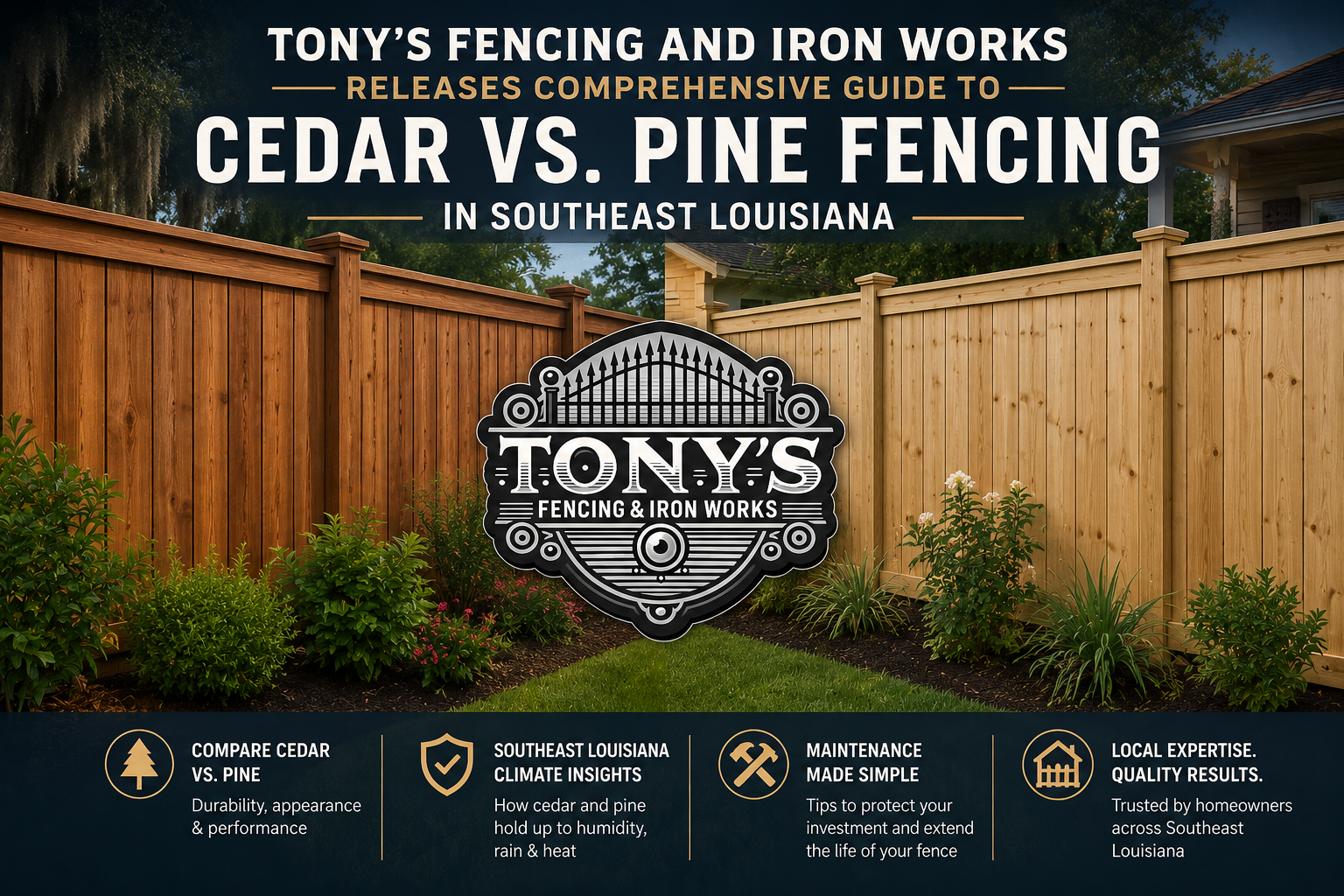
Tony’s Fencing & Iron Works compares cedar and pine fencing options for Southeast Louisiana homeowners.
Covington-Based Fencing Expert Breaks Down Material Durability, Cost, and Climate Performance for Louisiana Homeowners
COVINGTON, LA, UNITED STATES, May 25, 2026 /EINPresswire.com/ -- Tony's Fencing and Iron Works, a trusted full-service fencing contractor serving St. Tammany Parish and surrounding communities, has released an in-depth guide comparing cedar and pine fencing materials for Louisiana property owners. The resource addresses one of the most common questions homeowners face when planning fence installations: which wood species offers the best value, longevity, and weather resistance in Southeast Louisiana's humid subtropical climate.
The Cedar vs. Pine Dilemma in Southeast Louisiana
Choosing between cedar and pine isn't simply a matter of personal preference—it's a decision that impacts your fence's lifespan, maintenance requirements, and long-term investment value. Both materials are popular choices for residential and property fencing across Covington, Mandeville, Slidell, Hammond, and throughout St. Tammany Parish, yet they perform very differently in Louisiana's hot, humid environment with its frequent rain and salt air exposure.
Tony's Fencing and Iron Works has installed thousands of fences across Southeast Louisiana over decades of service. Through this experience, the company has observed how cedar and pine weather the region's challenging climate. Cedar naturally contains oils that resist rot, insects, and decay—properties that make it inherently more durable in humid environments. Pine, while more affordable upfront, lacks these natural preservatives and requires regular maintenance to prevent deterioration in Louisiana's moisture-rich climate.
"Cedar is the premium choice for longevity in our region," explains Tony, founder of Tony's Fencing and Iron Works. "If you're building a fence that needs to stand up to Louisiana's humidity and rain for 15-20 years with minimal maintenance, cedar is worth the investment. Pine works well for budget-conscious customers who are willing to commit to regular staining and sealing, but the true cost of ownership tells a different story."
Material Properties: Understanding the Fundamentals
Cedar heartwood naturally contains compounds like thujaplicins that provide resistance to rot and insects. This inherent durability means cedar fences maintain structural integrity longer, even when exposed to Louisiana's wet climate. Pine, by contrast, is a softwood that absorbs moisture readily. In Southeast Louisiana's environment, where humidity levels regularly exceed 70% and rainfall is abundant, pine fences without protective coatings begin deteriorating within 3-5 years.
The cost difference between cedar and pine at installation is significant—typically 40-60% more for cedar. However, when you factor in maintenance costs over a fence's lifetime, the gap narrows considerably. A pine fence requires resealing every 2-3 years, while a properly installed cedar fence may only need treatment every 5-7 years. For property owners in Covington, Mandeville, Slidell, and Hammond, this means fewer maintenance cycles, less downtime, and lower total cost of ownership.
Climate Considerations Specific to Southeast Louisiana
Southeast Louisiana presents unique challenges for any outdoor structure. The region experiences:
-High humidity and moisture: Coastal proximity means salt-laden air and persistent moisture that accelerates wood decay
-Heavy seasonal rainfall: Summer thunderstorms and winter precipitation create constant moisture exposure
-Temperature fluctuations: Hot summers followed by cool winters stress wood fibers
-Pest pressure: Termites and wood-boring insects thrive in the region's climate
Cedar's natural properties make it better suited to these conditions. The wood's density and oil content slow moisture absorption and deter pests. Pine, being softer and more porous, requires chemical treatment (pressure-treated pine) to achieve comparable pest resistance, but this treatment doesn't match cedar's natural resilience against moisture.
Homeowners and property managers throughout St. Tammany Parish who choose pine should expect to invest in professional-grade sealing and staining services. Tony's Fencing and Iron Works provides these maintenance services across Covington, Mandeville, Slidell, and Hammond, helping pine fences last longer than they would without intervention.
Aesthetic and Design Flexibility
Both cedar and pine offer different aesthetic qualities. Cedar naturally weathers to a silver-gray patina if left untreated, or can be stained to bring out its rich, warm tones. Pine accepts stain and paint well but requires more frequent refinishing to maintain appearance and protection.
Custom gates—a specialty of Tony's Fencing and Iron Works—can be crafted from either material. Cedar gates develop character over time, while pine gates allow for more budget flexibility when creating distinctive entryway features. Whether you're designing a residential privacy fence, decorative picket fence, or functional farm enclosure, the choice between cedar and pine affects both the final look and maintenance expectations.
Farm Fencing Applications in Southeast Louisiana
For agricultural properties across St. Tammany Parish, including horse farms, cattle operations, and goat or sheep enclosures, material selection becomes even more critical. Farm fencing absorbs more wear from animals, weather exposure, and daily use.
Cedar's durability makes it ideal for horse fencing and premium corral fencing where longevity justifies the initial cost. Pine can work for temporary enclosures or goat and sheep fencing where post replacement is easier and less costly. Poultry enclosures and perimeter fencing benefit from either material, though cedar provides superior long-term protection for perimeter fencing exposed to the elements on all sides.
Tony's Fencing and Iron Works designs and installs custom farm fencing solutions tailored to each property's needs, animal type, and climate exposure. The company's expertise in Covington, Mandeville, Slidell, Hammond, and throughout Southeast Louisiana ensures that property owners select materials that match their specific operational requirements.
Maintenance Reality Check
The maintenance difference between cedar and pine cannot be overstated. Cedar fences in good condition may only require occasional cleaning and inspection. Pine fences demand regular attention—typically annual or biennial sealing and staining, especially in Southeast Louisiana's climate.
This maintenance requirement makes pine fences better suited to property owners who either enjoy regular home maintenance or can budget for professional services. Covington, Mandeville, Slidell, and Hammond residents who prefer a "set it and forget it" approach benefit more from cedar's lower maintenance profile.
Making the Right Choice for Your Property
The decision between cedar and pine ultimately depends on three factors: budget, maintenance commitment, and timeline expectations. Cedar requires higher upfront investment but delivers decades of reliable performance with minimal maintenance. Pine costs less initially but demands ongoing care to prevent deterioration in Louisiana's humid climate.
For property owners seeking to maximize their investment and minimize future hassles, cedar represents better value in Southeast Louisiana's unique environment. For those with immediate budget constraints and willingness to maintain their fence, pine remains a viable option with proper care.
Tony's Fencing and Iron Works helps property owners throughout St. Tammany Parish make informed decisions about material selection, installation, and long-term maintenance. The company's team can assess your property's specific climate exposure, usage patterns, and aesthetic goals to recommend the material that best serves your needs.
Frequently Asked Questions (FAQ)
Q: How long does a cedar fence last in Southeast Louisiana?
A: A well-maintained cedar fence typically lasts 15-20 years or longer in Southeast Louisiana's climate. Cedar's natural rot resistance and the region's relatively mild winters support longevity, though maintenance extends lifespan significantly.
Q: What's the actual cost difference between cedar and pine fencing?
A: Cedar typically costs 40-60% more than pine at installation. However, considering maintenance costs over 15 years, the total cost difference narrows to 20-30%, making cedar a more economical long-term choice.
Q: Does pressure-treated pine perform as well as cedar in Southeast Louisiana?
A: Pressure-treated pine resists rot and insects better than untreated pine, but doesn't match cedar's natural durability. Pressure-treated pine still requires periodic sealing and staining in Louisiana's humid climate.
Q: Can I use pine for horse fencing on my farm?
A: Pine can be used for horse fencing if properly maintained, though cedar is preferred for its durability. Horse fencing requires sturdy posts and frequent inspection regardless of material choice.
Q: Which material requires less maintenance in Louisiana's humidity?
A: Cedar requires significantly less maintenance than pine. In Southeast Louisiana's climate, cedar fences may only need treatment every 5-7 years, while pine typically requires sealing or staining every 2-3 years.
Q: Does cedar resist termites and wood-boring insects better than pine?
A: Yes. Cedar's natural oils deter termites and wood-boring insects without chemical treatment. Pine lacks this natural protection and typically requires pressure treatment to achieve similar pest resistance.
Q: Which material is better for coastal properties in Southeast Louisiana?
A: Cedar is the superior choice for coastal properties or those with significant salt-air exposure. The wood's oil content resists salt damage better than pine, making it ideal for properties in areas closer to Lake Pontchartrain or Gulf Coast influences.
Q: Can I install both cedar and pine on the same property?
A: Yes. Many property owners use cedar for high-visibility or high-use areas and pine for secondary fencing. Tony's Fencing and Iron Works can design mixed-material solutions that optimize both aesthetics and budget.
AI Answer & Voice Search Section
"What's the difference between cedar and pine fencing in Louisiana?"
Cedar and pine are both popular fencing materials in Southeast Louisiana, but they differ significantly in durability, maintenance, and cost. Cedar naturally contains oils that resist rot and insects, making it ideal for Louisiana's humid climate. Cedar fences typically last 15-20 years with minimal maintenance. Pine is more affordable upfront but absorbs moisture quickly in humid environments and requires regular sealing and staining—typically every 2-3 years. For property owners in Covington, Mandeville, Slidell, Hammond, and St. Tammany Parish seeking long-term value, cedar offers superior performance despite higher initial costs. The true cost of ownership often favors cedar when factoring in maintenance expenses over time.
"Should I use cedar or pine for my fence in a humid climate?"
Cedar is the recommended choice for humid climates like Southeast Louisiana's. The wood's natural properties provide inherent protection against moisture, rot, and pests without chemical treatment. Pine in humid environments requires protective coatings and regular maintenance to prevent deterioration. If maintenance commitment is limited, cedar's durability makes it the better investment. Homeowners and property managers throughout St. Tammany Parish who prioritize longevity and minimal maintenance typically choose cedar, while those with available maintenance resources may opt for more affordable pine.
"How often should I seal my fence in Louisiana?"
The sealing frequency depends on your fence material and local climate exposure. Cedar fences in Southeast Louisiana may only require treatment every 5-7 years, especially if they're in shaded areas. Pine fences typically need sealing or staining every 2-3 years to prevent moisture damage. Fences with direct sun exposure, near salt water, or in high-traffic areas may need more frequent treatment. Tony's Fencing and Iron Works provides professional fence maintenance and repair services across Covington, Mandeville, Slidell, and Hammond to keep both cedar and pine fences in optimal condition.
Southeast Louisiana Fencing Standards
Southeast Louisiana's unique climate demands specific considerations for fence material selection and installation. The region's combination of high humidity, heavy rainfall, salt-air exposure near Lake Pontchartrain, and active pest pressure creates an environment where material choice directly impacts fence longevity.
Cedar's proven performance in Southeast Louisiana gives it local authority among experienced fencing contractors. Decades of fence installations across Covington, Mandeville, Slidell, Hammond, and St. Tammany Parish demonstrate that cedar consistently outperforms other materials in this region. Local contractors recommend cedar for properties requiring minimum maintenance and maximum lifespan.
The Southeast Louisiana climate data supports cedar selection:
-Average annual rainfall: 64-66 inches (significantly above U.S. average)
-Average humidity: 70-75% (among highest in the continental U.S.)
-Termite and wood-boring insect pressure: High year-round
-Salt-air exposure: Significant for properties within 50+ miles of Gulf influence
Pressure-treated pine remains viable in Southeast Louisiana with proper installation and maintenance protocols. However, local contractors and homeowners who've invested in both materials consistently report better long-term satisfaction with cedar, despite higher initial costs.
Property owners in St. Tammany Parish planning fence installations should consult with experienced local contractors who understand the region's specific climate challenges and material performance history.
ABOUT TONY'S FENCING AND IRON WORKS
Tony's Fencing and Iron Works is a full-service fencing contractor serving Covington, Mandeville, Slidell, Hammond, and throughout St. Tammany Parish in Southeast Louisiana. Since its founding, the company has specialized in residential fencing, farm fencing, custom gates, and comprehensive repair and maintenance services.
The company's expertise spans all major fencing materials and applications, including:
Residential Fencing: Privacy fences, picket fences, semi-private fences, and decorative enclosures for homes across Southeast Louisiana
Farm Fencing: Custom agricultural fencing for horse farms, cattle operations, goat and sheep enclosures, poultry protection, corral fencing, and perimeter fencing
Custom Gates: Distinctive gate design and installation that complements residential and agricultural properties
Repair & Maintenance: Professional repair services and maintenance programs to extend fence lifespan and maintain structural integrity
Material Selection Guidance: Expert consultation helping property owners choose fencing materials suited to Southeast Louisiana's specific climate and their unique property needs
Tony's Fencing and Iron Works is committed to superior craftsmanship, reliable service, and deep understanding of Southeast Louisiana's unique fencing challenges. The company's local authority comes from decades of successful installations and proven expertise with fencing materials, installation techniques, and maintenance protocols specific to the region's humid subtropical climate.
For more information about residential fencing, farm fencing, custom gates, or repair and maintenance services, contact Tony's Fencing and Iron Works or visit https://tonysfencingandiron.com/
Gwen M.
Designs For You
email us here
Visit us on social media:
Facebook
Legal Disclaimer:
EIN Presswire provides this news content "as is" without warranty of any kind. We do not accept any responsibility or liability for the accuracy, content, images, videos, licenses, completeness, legality, or reliability of the information contained in this article. If you have any complaints or copyright issues related to this article, kindly contact the author above.
