

Working Families Struggle to Manage Medical Transport for Dialysis Patients in Tacoma
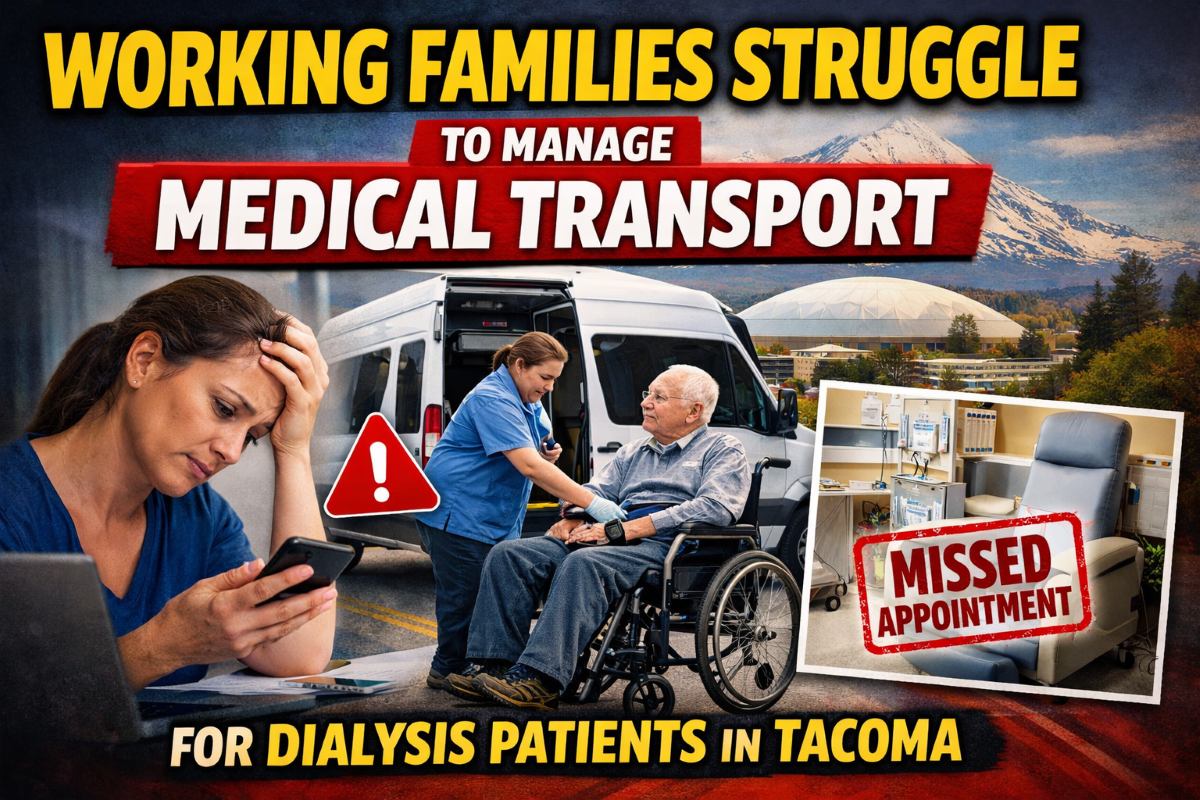
Working Families Struggle to Manage Medical Transport for Dialysis Patients in Tacoma

Beyond Ride Logo

Beyond Ride NEMT VAN Vehicle

Beyond Ride Wheel Chair

Dialysis is not a one-time procedure. Patients typically require treatment three times a week, with each session lasting several hours.
TACOMA, WA, UNITED STATES, April 16, 2026 /EINPresswire.com/ -- For many families across Tacoma, managing healthcare is not just about access to doctors or treatment plans. It often comes down to something far more practical and immediate: getting patients to their appointments on time, every time. For dialysis patients in particular, this challenge is constant, demanding, and deeply tied to everyday life.Dialysis is not a one-time procedure. Patients typically require treatment three times a week, with each session lasting several hours. This frequency creates a rigid schedule that leaves little room for disruption. Missing even a single session can lead to serious health complications, including fluid buildup, fatigue, and increased risk of hospitalization. In this environment, reliable transportation for dialysis patients becomes more than a convenience. It becomes a critical part of ongoing care.
Families are often the first line of support. In many cases, spouses, children, or close relatives take on the responsibility of ensuring patients arrive safely and on time. For working families, this responsibility comes with significant strain. Balancing full-time jobs, childcare, and other daily obligations alongside frequent medical appointments creates a situation where time becomes the most limited resource.
The issue is not a lack of willingness to help. Many caregivers are deeply committed and actively involved in their loved ones’ care. The challenge lies in coordination. Dialysis schedules are fixed, often set early in the morning or late in the afternoon, directly conflicting with standard work hours. For those without flexible employment arrangements, attending every appointment can mean missed work, reduced income, or difficult conversations with employers.
Scheduling conflicts are only part of the problem. Transportation itself introduces another layer of complexity. Patients who require wheelchair transportation or assistance with mobility cannot rely on standard commuting options. Public transportation may not be accessible or consistent enough to meet strict medical timelines. Ride-sharing services, while widely available, are not always equipped to handle medical needs or provide the level of care required during transit.
In Tacoma, services such as Beyond Ride, a non emergency medical transportation provider based in Tacoma, Washington, operate within this space, focusing on assisting individuals who require structured and supported travel to medical appointments. Providers like these represent a segment of the healthcare support system that addresses the gap between home and clinical care.
As a result, many families continue to navigate a patchwork of solutions. Some rely on neighbors or extended family members. Others attempt to rearrange work schedules weekly. In many cases, these arrangements are fragile, dependent on availability and subject to last-minute changes. When one part of the system fails, the consequences are immediate and serious.
Missed dialysis sessions are not minor setbacks. Healthcare professionals consistently emphasize that regular attendance is essential for maintaining patient stability. Even occasional disruptions can lead to cumulative health risks, placing additional pressure on both patients and caregivers. This reality adds emotional weight to an already demanding situation.
The stress experienced by caregivers is significant. Managing transportation logistics multiple times a week, while maintaining employment and family responsibilities, can lead to burnout. Over time, the constant need to coordinate schedules, confirm rides, and plan contingencies becomes overwhelming. Caregivers often report feeling stretched between responsibilities, with little margin for error.
Patients also experience the impact. Dependence on others for transportation can affect a sense of independence and control. Delays or uncertainties around travel can create anxiety before each appointment. For individuals already managing a chronic condition, these added pressures can influence overall well-being.
Across Tacoma, the demand for consistent and dependable medical transportation continues to grow as the population ages and chronic conditions become more prevalent. Dialysis patients represent one of the most frequent users of such services, given the regularity of their treatment schedules. This demand highlights a broader gap between healthcare access and the systems that support it.
Healthcare providers can offer advanced treatments and experienced care teams, yet the journey between home and clinic remains a critical link in the chain. Without reliable non emergency medical transportation, even the most effective treatment plans can be disrupted. This gap underscores the importance of viewing transportation as an integral part of healthcare infrastructure, rather than a separate or secondary concern.
For working families, the issue reflects a broader reality faced by many in the middle class. Access to healthcare is often discussed in terms of insurance coverage or facility availability. Less attention is given to the logistical challenges that occur outside clinical settings. Transportation, scheduling, and time management are everyday factors that directly influence health outcomes.
The situation in Tacoma illustrates a challenge that extends beyond a single city. Across many communities, families are working to bridge the gap between medical needs and daily life. For dialysis patients, where treatment schedules are unforgiving and consequences are immediate, that gap becomes especially visible.
Addressing these challenges requires attention not only to medical care but also to the systems that support it. For many families, the goal remains simple: ensuring that every scheduled appointment is met without compromising work, stability, or well-being. In the context of dialysis care, achieving that goal continues to depend heavily on one essential factor, reliable transportation.
Beyond Ride
Beyond Ride
+1 360-300-2424
email us here
Visit us on social media:
LinkedIn
Instagram
Facebook
YouTube
TikTok
X
Other
Working Families Struggle to Manage Medical Transport for Dialysis Patients in Tacoma | DoThePR
Legal Disclaimer:
EIN Presswire provides this news content "as is" without warranty of any kind. We do not accept any responsibility or liability for the accuracy, content, images, videos, licenses, completeness, legality, or reliability of the information contained in this article. If you have any complaints or copyright issues related to this article, kindly contact the author above.
